On Saturday morning, Recoveo received a call from a company experiencing a server issue. It was a software publishing company working for large retail chains. They were urgently looking for a replacement disk for their RAID server. Although we had 50,000 drives in stock, we did not have the required model available. We contacted one of our partners, who was able to intervene within one hour. By the evening, the server was back online. The manager was relieved and believed everything would return to normal…
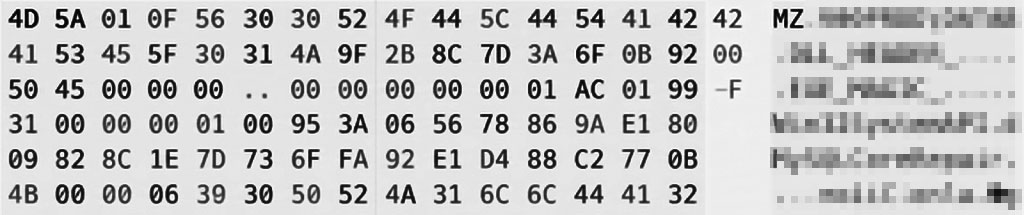
On Monday morning, they called us again. The MySQL database managing customer data would no longer start. The forced RAID rebuild had caused corruption in the database. We found fragments of .DLL and .EXE files inside the database.
Our first-level team attempted operations on the database without success. Safe modes refused to function.
Meanwhile, the client tried eight different data recovery software solutions on their side, all without success.
When MySQL repair software fails
Before contacting Recoveo, the client had already reached out to the technical support of their server manufacturer. As in the case of a radiology practice in Switzerland faced with a similar failure on a Synology NAS, the manufacturer’s support provided reconstruction advice that ultimately destroyed the data.
It is a reality we regularly observe: internal IT teams and manufacturer support services have limited tools when faced with deep data corruption. Only a specialized laboratory, equipped with proprietary tools and experience built across numerous cases, can truly make a difference.
Our advice
Before performing any manipulation on a RAID system, we recommend testing a backup first. If no backup is available, reconstruction can go wrong; make disk clones before any intervention
The Recoveo method
We have more than 25 years of experience in data recovery. Rely on the French leader; our expertise enables us to deliver a high-level response. We possess cutting-edge knowledge in advanced database recovery methods.
Phase 1: Analysis and visualization of SQL data
Our engineers first analyzed each damaged file using hexadecimal-level reading through an internal script, decoding raw data byte by byte. This allowed us to precisely isolate the different valid data structures (dates, identifiers).
This deep analysis also revealed .exe and .pk signatures within the MySQL databases, proving that blocks from other volumes had been mixed into the data following a failed RAID rebuild.
Phase 2: Reconstruction from a corrupted MySQL database
Our R&D team then developed a custom solution within 3 days, enabling table-by-table processing of the database. We sent the client an Excel file listing the tables along with a recovery percentage for each one.
Our teams have a complete understanding of its internal structures. This expertise made it possible to identify usable table fragments within the partially corrupted files.
Phase 3: Extraction, reconstruction, and delivery
The process took place in three steps:
Extraction of all recoverable textual data into intermediate files
Creation of an empty database with the reconstructed structure
Conversion of the files into DUMP (.dmp) format to allow the client to re-import the data. We delivered 6 GB of .dmp files.
In 5 days of processing, Recoveo successfully restored the critical data from a MySQL database.
Key takeaway
If you do not have a backup, clone the disks before rebuilding a RAID.
Are you facing data loss?
Whether due to a RAID failure, accidental deletion, ransomware, or database corruption, Recoveo handles both common cases and the most complex situations.



 WhatsApp 07 74 77 62 57